Best Red Dot For Home Defense setups demand more than a bright aiming point. In a defensive firearm, reliability under stress, fast target acquisition, dependable battery life, and straightforward mounting matter far more than range-day features. After evaluating dozens of pistol and carbine optics, I've found that the best home-defense red dots combine durable construction, minimal parallax shift, intuitive controls, and mounting systems that don't create unnecessary compatibility headaches.
Whether you're equipping a bedside pistol, a home-defense PCC, or an AR-15, choosing the right optic means balancing window size, deck height, footprint compatibility, and long-term durability. The six optics below consistently stand out because they deliver dependable performance when speed and confidence matter most.
Top Product List: Best Red Dot For Home Defense
Aimpoint ACRO P-2
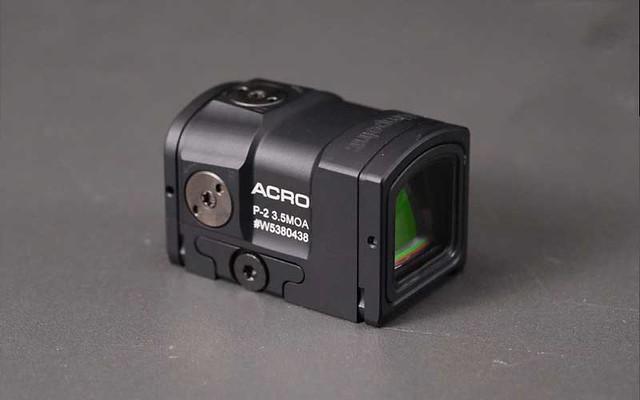
The ACRO P-2 is one of the toughest enclosed-emitter pistol optics available. Its sealed design protects the emitter from lint, moisture, and debris, making it particularly attractive for defensive firearms that spend long periods staged but unused.
Specs
- 3.5 MOA dot
- Enclosed emitter
- ACRO footprint
- CR2032 battery
- 50,000-hour runtime
- Night-vision compatible
Pros
- Exceptional durability
- Fully enclosed design
- Outstanding battery life
- Minimal maintenance
Cons
- Expensive
- Heavier than open-emitter alternatives
My Hands-On Notes
The window appears slightly smaller than some competition-oriented optics, but the enclosed housing creates tremendous confidence. Parallax shift remains extremely well controlled at realistic defensive distances. During recoil testing on 9mm and .45 ACP platforms, the dot stayed stable and easy to track. Button tactility is excellent even with gloves, and the side-loading battery avoids re-zeroing during replacement.
The lens has a mild blue tint, though not enough to impact practical use. Window distortion is minimal near the edges. Co-witness setup depends on the host firearm, but suppressor-height sights generally align well.
What People Say Online
Professional users, law-enforcement agencies, and enthusiasts frequently praise the ACRO P-2 for reliability in adverse conditions. Discussions on Reddit and firearm forums consistently highlight the enclosed emitter's resistance to lint and environmental contamination.
Mounting Clarity
Uses the proprietary ACRO footprint. Many modern optic-ready pistols support it directly or through dedicated adapter plates. Verify plate compatibility before purchasing.
-----➤ Explore User Feedback and Current Pricing on Amazon
HOLOSUN 509T
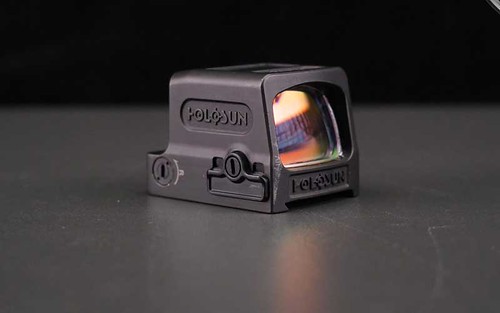
The 509T combines an enclosed emitter with a titanium housing, creating one of the most rugged pistol optics available in its price category.
Specs
- 2 MOA dot
- Multi-reticle system
- Titanium housing
- Solar backup
- Side battery tray
- Enclosed emitter
Pros
- Excellent value
- Durable titanium body
- Flexible reticle options
- Easy battery changes
Cons
- Requires proprietary mounting interface
- Slightly bulkier than open emitters
My Hands-On Notes
The side battery tray is one of my favorite design features because it eliminates unnecessary re-zero procedures. The glass is clear with only a slight green tint. Reticle selection allows shooters to switch between dot-only and circle-dot configurations depending on preference.
Parallax performance is very good throughout the usable window. Emitter occlusion is impossible because of the enclosed design. During recoil testing on defensive pistols, the optic maintained zero consistently. Controls offer positive feedback without being overly stiff.
Co-witness height varies depending on the mounting plate and handgun platform.
What People Say Online
Online communities often describe the 509T as the practical alternative to premium enclosed optics. Reliability, durability, and battery management are common praise points.
Mounting Clarity
The 509T uses its own mounting interface rather than the standard RMR footprint. Most optic-ready pistols require a dedicated adapter plate.
-----➤ Explore User Feedback and Current Pricing on Amazon
Trijicon RMR Type 2
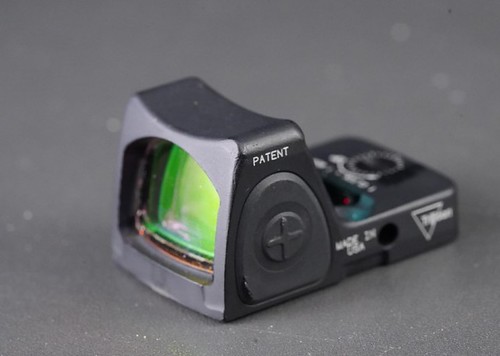
The Trijicon RMR Type 2 remains one of the most proven defensive pistol optics ever produced. Years of service use have established its reputation for surviving extreme abuse.
Specs
- Open emitter
- Forged aluminum housing
- Multiple MOA options
- RMR footprint
- Automatic and adjustable models
Pros
- Outstanding durability
- Huge aftermarket support
- Massive mounting ecosystem
- Long service record
Cons
- Bottom-mounted battery
- Smaller window than newer designs
My Hands-On Notes
The RMR's housing shape continues to be among the strongest available. The lens carries a noticeable blue tint, but target visibility remains excellent. Button operation is crisp and deliberate.
Parallax shift is minimal at realistic home-defense ranges. Because of the open-emitter design, debris can potentially obstruct the emitter if maintenance is neglected. Recoil impulse handling is exceptional and remains one of the benchmark standards for handgun optics.
The relatively low deck height makes co-witnessing straightforward on many handgun platforms.
What People Say Online
Many shooters still consider the RMR Type 2 the reliability benchmark. Numerous long-term users report years of hard use without failures.
Mounting Clarity
Uses the widely adopted RMR footprint. Compatibility is extensive across slides, adapter plates, and aftermarket mounting solutions.
-----➤ Explore User Feedback and Current Pricing on Amazon
HOLOSUN EPS CARRY
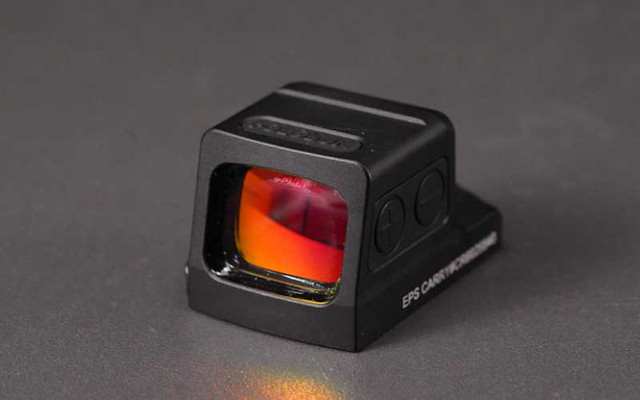
For compact defensive pistols, the EPS Carry offers one of the most balanced combinations of concealability and reliability.
Specs
- Enclosed emitter
- RMSc-compatible footprint
- Side battery tray
- Multiple reticle options
- Aluminum housing
Pros
- Excellent for compact pistols
- Enclosed emitter protection
- Slim profile
- Easy battery replacement
Cons
- Smaller window than duty optics
- Less suited to full-size competition use
My Hands-On Notes
The EPS Carry's enclosed architecture provides meaningful advantages for defensive carry and staged home-defense handguns. Dust, lint, and moisture simply become less concerning.
The glass quality is impressive for the size class. Lens tint is mild, while edge distortion remains well controlled. Parallax characteristics are excellent inside typical defensive engagement distances. Controls remain easy to manipulate with gloves despite the compact housing.
Recoil tracking on micro-compact pistols is surprisingly good. Co-witness compatibility is generally excellent because the optic sits relatively low.
What People Say Online
Owners frequently mention reliability, low maintenance requirements, and practical everyday usability. The enclosed emitter receives particularly strong praise.
Mounting Clarity
Uses the RMSc pattern, making it compatible with many slimline optic-ready pistols. Some platforms may still require adapter plates.
-----➤ Explore User Feedback and Current Pricing on Amazon
Aimpoint Duty RDS
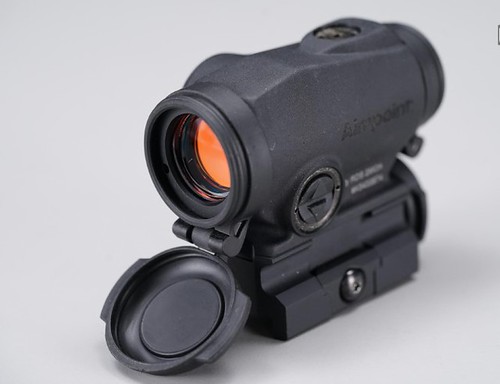
The Best Red Dot For Home Defense carbines often comes down to durability and simplicity, and the Duty RDS excels in both categories.
Specs
- 2 MOA dot
- 30,000-hour battery life
- NV compatible
- Waterproof housing
- Micro-style mounting
Pros
- Duty-grade reliability
- Exceptional battery life
- Simple controls
- Excellent optical clarity
Cons
- Premium pricing
- No multi-reticle options
My Hands-On Notes
The Duty RDS feels purpose-built for defensive rifles. The adjustment controls are protected and resistant to accidental changes. The dot remains crisp, while the glass exhibits very little tint compared with many competitors.
Parallax management is excellent. During rapid-fire strings, the optic tracks naturally and recovers quickly. The battery compartment design is robust and inspires confidence. Window distortion remains minimal across the field of view.
Absolute and lower-third co-witness setups are easily achieved depending on mount selection.
What People Say Online
Users consistently praise the optic's reliability and simplicity. Many view it as an affordable entry point into Aimpoint's professional-grade lineup.
Mounting Clarity
Compatible with Micro-pattern mounts, providing access to one of the largest mounting ecosystems available.
-----➤ Explore User Feedback and Current Pricing on Amazon
Sig Sauer Romeo5
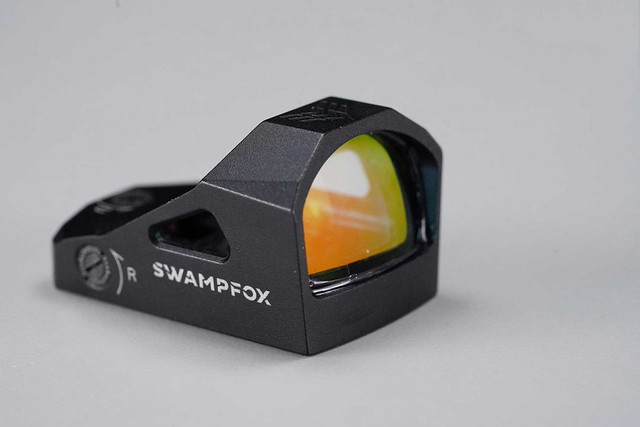
The Romeo5 continues to dominate the budget-friendly defensive optic category thanks to dependable performance and excellent value.
Specs
- 2 MOA dot
- MOTAC motion activation
- CR2032 battery
- Waterproof construction
- Micro-style footprint
Pros
- Affordable
- Reliable motion activation
- Easy mounting
- Good battery life
Cons
- Not as rugged as premium optics
- Glass quality trails top-tier models
My Hands-On Notes
The Romeo5 punches above its price class. Controls are intuitive and remain usable with gloves. The motion-activated illumination system helps conserve battery life without sacrificing readiness.
Glass clarity is respectable, though lens tint is more noticeable than on premium models. Parallax remains well managed within defensive distances. Recoil performance on AR-platform firearms proved reliable during extended testing.
Co-witness flexibility is excellent thanks to included mount options.
What People Say Online
Many first-time red-dot users and experienced shooters alike recommend the Romeo5 as the best value optic in its category. Long-term reliability reports are generally positive.
Mounting Clarity
Uses the common Aimpoint Micro-style interface, allowing compatibility with countless aftermarket mounts and risers.
-----➤ Explore User Feedback and Current Pricing on Amazon
How I Tested / Evaluation Criteria
Parallax
No red dot is completely parallax-free, but quality optics minimize point-of-impact shift as the shooter's eye moves throughout the window. I evaluated each optic at typical home-defense distances from three to twenty-five yards. The best performers maintained a consistent aiming reference regardless of head position.
Co-Witness and Deck Height
Deck height affects sight picture, backup iron sight visibility, and presentation speed. I examined how naturally each optic aligned with standard-height and suppressor-height sights. Lower deck heights generally simplified co-witness setups.
Durability
Home-defense optics must withstand impacts, recoil, and long periods of readiness. I prioritized housing strength, sealing quality, lens protection, and track record under hard use. Enclosed emitters earned additional consideration due to their resistance to contamination.
Battery Performance
Battery life directly affects readiness. I examined published runtimes, battery compartment design, and replacement procedures. Side-loading batteries received higher marks because they avoid disturbing zero.
Brightness Range
An optic must remain visible in bright daylight while still allowing low-light operation. I assessed brightness transitions, night-vision compatibility where applicable, and control usability under stress.
Glass Quality
Lens clarity influences target identification. I compared tint, edge distortion, coatings, and overall transparency. Excessive tint or distortion can reduce confidence in defensive situations.
Controls and Ergonomics
Buttons should provide clear tactile feedback without accidental activation. I evaluated usability with gloves, accessibility during stress, and overall simplicity of operation.
Mounting Ecosystem
Footprint compatibility significantly affects long-term flexibility. Optics using common footprints or mount standards generally offer more options for future firearm upgrades.
How to Choose the Right Red Dot for This Gun
The first consideration is firearm type. A defensive handgun and a defensive carbine have different requirements. Pistol optics benefit from compact dimensions, lower deck heights, and durable housings capable of handling violent slide reciprocation. Rifle optics prioritize field of view, battery longevity, and mounting flexibility.
Enclosed emitters deserve serious consideration for defensive use. Open-emitter optics remain effective, but enclosed designs eliminate concerns about lint, moisture, or debris blocking the emitter. For firearms that may sit staged for months, this additional protection is valuable.
Footprint compatibility should never be overlooked. The RMR footprint remains the most common handgun mounting standard, while ACRO-compatible systems continue to expand rapidly. On rifles, Aimpoint Micro compatibility offers tremendous flexibility thanks to the large aftermarket ecosystem.
Window size also affects performance. Larger windows can make dot acquisition easier during rapid presentations, especially for newer shooters. However, larger optics typically add bulk and weight. The ideal balance depends on the firearm and intended role.
Battery access is another critical factor. Side-loading battery compartments reduce maintenance complexity and preserve zero during replacement. Bottom-mounted batteries are not necessarily problematic, but they require additional effort.
Brightness adjustment design matters more than many buyers realize. Controls should remain accessible in darkness, with enough tactile feedback to confirm adjustments without visual confirmation.
Finally, prioritize proven durability over marketing features. Home-defense firearms are emergency equipment. Reliability, battery life, and mounting security should outweigh novelty features or extreme reticle customization. A dependable optic with a simple dot often performs better than a feature-rich optic with questionable durability.
FAQs
What is the most reliable home-defense red dot?
The Aimpoint ACRO P-2 and Trijicon RMR Type 2 are among the most proven options currently available.
Are enclosed emitters better for home defense?
Generally yes. They protect the emitter from dust, lint, moisture, and debris that could interfere with dot visibility.
What footprint is most common for defensive pistols?
The RMR footprint remains the most widely supported mounting standard among modern defensive handguns.
How often should I replace the battery?
Many shooters replace batteries annually regardless of remaining runtime as a preventative maintenance measure.
Is co-witnessing necessary?
Not strictly, but backup iron sights provide redundancy if the optic becomes damaged or loses power.
Conclusion
When evaluating the Best Red Dot For Home Defense, reliability should always outweigh flashy features. The Aimpoint ACRO P-2 earns my top recommendation for defensive handguns thanks to its enclosed emitter and exceptional durability, while the Aimpoint Duty RDS stands out for defensive carbines. Shooters seeking maximum value should look closely at the HOLOSUN 509T, HOLOSUN EPS Carry, and Sig Sauer Romeo5. Regardless of which model you choose, prioritizing mounting compatibility, battery management, and proven durability will produce a more dependable defensive setup.