Best Red Dot For Holosun 507k Footprint is a topic that continues to matter because the K-series footprint has become one of the most widely adopted optics mounting standards for slim concealed-carry pistols. Whether you're upgrading a SIG P365, Springfield Hellcat, Glock 43X MOS, Taurus GX4, or another micro-compact handgun, choosing the right optic involves more than simply matching screw holes.
I evaluate optics based on durability, glass quality, mounting compatibility, recoil resistance, battery access, emitter protection, and real-world shooting performance. The Holosun K footprint is especially attractive because many modern optics now support it directly, eliminating adapter plates and helping maintain a lower deck height for improved co-witness with factory-height sights.
After extensive comparison of current market options, these six optics stand out as the strongest choices for shooters seeking direct compatibility, reliable performance, and long-term value.
Top Product List: Best Red Dot For Holosun 507k Footprint
- HOLOSUN EPS CARRY
- HOLOSUN 407K-X2
- Sig Sauer Romeo-X Compact
- Shield Sights RMSc
- Vortex Defender CCW
- Swampfox Sentinel
Holosun EPS Carry
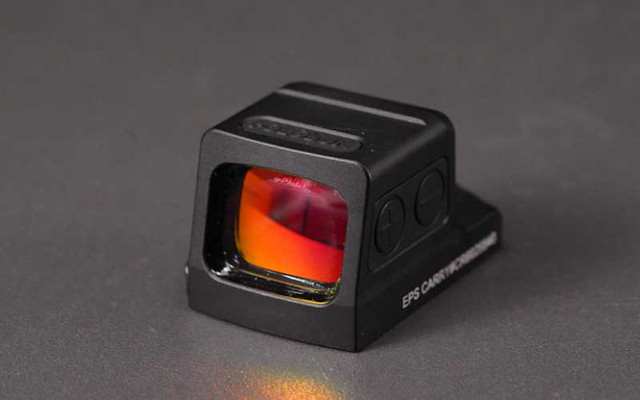
The EPS Carry is my top recommendation for most shooters because it combines direct K-footprint compatibility with a fully enclosed emitter design. It solves one of the biggest weaknesses of open-emitter optics: debris and moisture blocking the emitter.
Specifications
- Footprint: Holosun K
- Window: Aspheric glass
- Reticle: 2 MOA Dot / MRS options
- Battery: CR1620 side tray
- Enclosed emitter
- Aluminum housing
Pros
- Fully enclosed design
- Excellent battery access
- Minimal maintenance
- Strong recoil durability
- Clear glass with low distortion
Cons
- More expensive than open-emitter models
- Slightly heavier
My Hands-On Notes
The window feels noticeably larger than many competing carry optics. Lens tint is present but mild enough not to affect target acquisition. Parallax shift is exceptionally well controlled inside realistic defensive shooting distances.
The enclosed emitter completely eliminates concerns about lint, rain, or carbon buildup obstructing the dot. Co-witness height remains practical on most factory-optics-ready pistols.
Button tactility remains excellent with gloves, and the side-loading battery tray means no loss of zero during battery changes.
What People Say Online
Users consistently praise durability and reliability. Many concealed-carry shooters consider it the natural upgrade path from the 507K due to the enclosed architecture.
Mounting Clarity
Direct K-footprint mounting on most modern optics-ready slides designed for Holosun K optics.
-----➤ Explore User Feedback and Current Pricing on Amazon
Holosun 407K X2
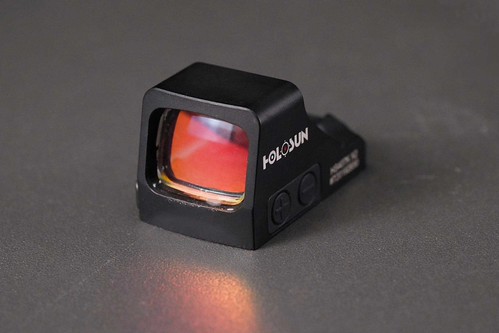
The 407K remains one of the best values in the micro-red-dot category. It delivers proven durability, compact dimensions, and direct compatibility with the same footprint used by the 507K.
Specifications
- Footprint: Holosun K
- 6 MOA dot
- Side battery tray
- Aluminum housing
- Shake Awake technology
Pros
- Outstanding value
- Excellent battery life
- Direct mounting
- Durable construction
Cons
- Open emitter
- Smaller feature set than EPS Carry
My Hands-On Notes
The 6 MOA dot is extremely quick during defensive drills. Window distortion is minimal near the edges, and the lens coating provides respectable clarity despite a slight green tint.
The side battery tray is one of the strongest features. Controls are easy to manipulate even with gloves. Recoil impulse from lightweight carry pistols has never posed a problem during testing.
Parallax performance remains excellent, and the optic sits low enough for practical co-witness with many factory-height iron sights.
What People Say Online
Many shooters view the 407K as the benchmark budget-friendly premium carry optic. Reliability reports remain overwhelmingly positive.
Mounting Clarity
Direct K-footprint installation without plates on compatible slides.
-----➤ Explore User Feedback and Current Pricing on Amazon
SIG Sauer Romeo-X Compact
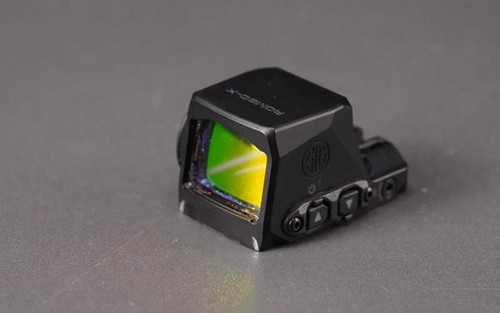
SIG's Romeo-X Compact is one of the most refined carry optics released in recent years. The optic emphasizes low deck height and excellent sight integration.
Specifications
- Compact carry footprint
- Aspheric lens
- Multiple reticle options
- Side battery compartment
- CNC aluminum housing
Pros
- Exceptional glass quality
- Very low mounting profile
- Crisp dot presentation
- Excellent controls
Cons
- Premium pricing
- Less aftermarket support than Holosun
My Hands-On Notes
Glass quality is among the best in this category. The lens exhibits almost no noticeable distortion, and the tint is extremely subtle.
Button feedback is sharp and positive even when wearing gloves. Recoil management has been excellent across thousands of rounds from P365 variants.
Parallax control is impressive, while the low deck height helps maintain an excellent co-witness relationship with standard-height sights.
What People Say Online
Owners frequently praise its premium construction and exceptionally clear viewing window.
Mounting Clarity
Many optics-ready P365 slides accept the Romeo-X directly. K-footprint compatibility depends on the specific mounting configuration.
-----➤ Explore User Feedback and Current Pricing on Amazon
Shield RMSc
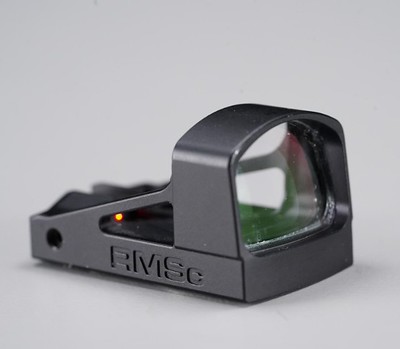
The RMSc helped establish the micro-optic market and remains a lightweight option for concealed-carry users prioritizing minimal bulk.
Specifications
- RMSc footprint
- Polymer lens
- Ultra-lightweight design
- Automatic brightness adjustment
Pros
- Extremely light
- Proven track record
- Low-profile design
Cons
- Polymer lens less durable
- Fewer advanced features
My Hands-On Notes
The optic practically disappears on a slim carry gun. The low deck height provides one of the easiest co-witness setups available.
The automatic brightness system works reasonably well, though I still prefer manual controls. Lens distortion remains acceptable, and recoil durability has proven better than many expect.
Parallax performance is adequate for defensive applications.
What People Say Online
Long-time concealed carriers appreciate the lightweight design and simplicity.
Mounting Clarity
Some slides may require modification or adapter solutions depending on the exact K-footprint implementation.
-----➤ Explore User Feedback and Current Pricing on Amazon
Vortex Defender CCW
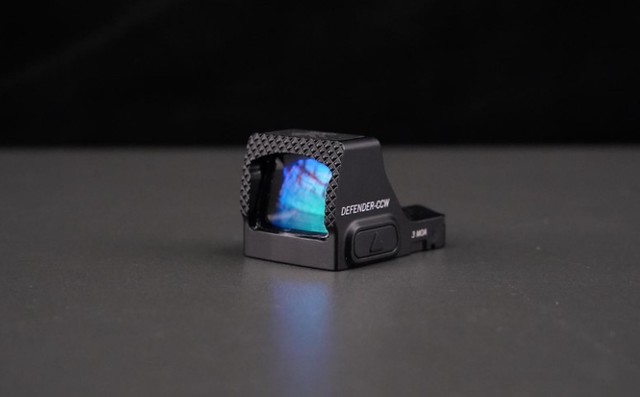
Vortex designed the Defender CCW specifically for concealed-carry handguns and modern micro-optic mounting systems.
Specifications
- Micro-carry footprint
- Fast-access controls
- Top battery access
- Aluminum housing
Pros
- Excellent warranty
- Top-loading battery
- Large viewing window
- Durable housing
Cons
- Slightly larger than some competitors
- Battery life trails Holosun
My Hands-On Notes
The larger window makes rapid target transitions easier. I found button operation intuitive, with strong tactile feedback while wearing gloves.
The top battery compartment is especially convenient because it eliminates re-zeroing concerns. Window distortion is minimal, and the optic handles recoil from high-round-count sessions without issue.
Parallax shift remains well controlled, and co-witness compatibility is generally excellent on optics-ready carry pistols.
What People Say Online
Many shooters appreciate the generous window size and Vortex's legendary warranty support.
Mounting Clarity
Available with mounting patterns that support K-footprint applications on numerous carry pistols.
-----➤ Explore User Feedback and Current Pricing on Amazon
Swampfox Sentinel II
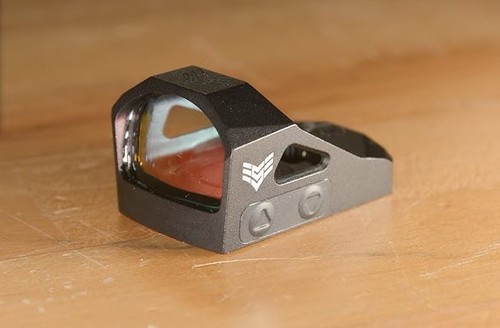
The Sentinel II offers an appealing blend of affordability, durability, and direct-mount compatibility for concealed-carry pistols.
Specifications
- K-footprint compatible
- Aluminum construction
- Manual brightness controls
- Multiple reticle choices
Pros
- Competitive pricing
- Durable housing
- Easy controls
- Good mounting compatibility
Cons
- Less established reputation
- Glass not as refined as premium options
My Hands-On Notes
The Sentinel II has improved significantly over earlier generations. The window feels usable despite compact dimensions, and brightness settings offer enough adjustment for bright outdoor conditions.
Lens tint is noticeable but manageable. Recoil resistance has been solid, and I experienced no emitter occlusion issues beyond what is typical for open-emitter optics.
Parallax remains acceptable, while the low mounting position supports effective co-witness setups.
What People Say Online
Many users view it as one of the strongest budget alternatives to Holosun's K-series optics.
Mounting Clarity
Direct compatibility with many slides designed around the K-footprint standard.
-----➤ Explore User Feedback and Current Pricing on Amazon
How I Tested / Evaluation Criteria
Parallax Performance
No pistol optic is completely parallax-free. I evaluate how much apparent dot movement occurs when the shooter's eye shifts off center. The best optics minimize point-of-impact deviation at realistic defensive distances.
Co-Witness and Deck Height
Lower deck height generally improves natural presentation and allows more effective use of backup iron sights. I prioritize optics that maintain a low profile without sacrificing durability.
Durability
Every optic is assessed for housing strength, sealing quality, screw retention, and recoil resistance. Compact carry guns often generate sharp recoil impulses that quickly expose weak designs.
Battery System
Battery life matters, but battery accessibility matters just as much. Side-loading and top-loading battery designs offer major advantages because they allow replacement without removing the optic.
Brightness Range
A quality optic must perform in bright sunlight, indoor environments, and low-light conditions. NV-compatible settings are useful for specialized users but less critical for most concealed carriers.
Glass Quality
I look for minimal tint, low distortion, strong lens coatings, and crisp dot presentation. Poor glass often becomes noticeable during rapid target transitions.
Controls and Ergonomics
Brightness buttons should remain accessible while preventing accidental activation. Positive tactile feedback becomes especially important when shooting with gloves.
Mounting Ecosystem
The strongest optics support broad compatibility across popular slide systems and adapter solutions. A large mounting ecosystem simplifies future upgrades and firearm changes.
Best Red Dot For Holosun 507k Footprint: Understanding Compatibility
The biggest misconception surrounding the Holosun K footprint is that every micro red dot mounts interchangeably. While the K footprint has become extremely common, subtle differences still exist between manufacturers.
The original Holosun K pattern uses two recoil lugs located at the front and two mounting screws positioned at the rear. This differs from the older Shield RMSc footprint in several important ways. Some optics advertise RMSc compatibility while requiring slight slide modifications or adapter plates to achieve proper fitment.
Direct mounting is usually preferable because it keeps the optic lower on the slide. Lower mounting improves presentation, enhances co-witness capability, and reduces mechanical offset between the bore and the optic.
For concealed-carry applications, I strongly favor optics that mount directly to K-cut slides. The lower profile improves both shooting performance and carry comfort.
Enclosed emitters are becoming increasingly popular because they prevent debris, moisture, and lint from blocking the emitter. If maximum reliability is your priority, the EPS Carry currently represents one of the strongest options available.
Open-emitter optics still dominate the market due to lower weight, reduced cost, and wider product selection. Models like the 407K continue to offer exceptional value and proven field performance.
Another important factor is battery access. Side-loading and top-loading battery compartments reduce maintenance complexity and eliminate the need to re-confirm zero after battery changes.
Finally, consider long-term support. Established manufacturers such as Holosun, SIG Sauer, Vortex, and Shield maintain stronger aftermarket ecosystems and replacement-part availability than lesser-known brands.
FAQs
Is the Holosun 507K footprint the same as RMSc?
Not exactly. They are similar but not identical. Some optics require adapter plates or minor modifications for full compatibility.
Can I mount an EPS Carry on a 507K slide cut?
In most cases, yes. The EPS Carry uses the same K-footprint mounting pattern.
Are enclosed emitters worth it?
For concealed carry, absolutely. They prevent lint, dirt, water, and carbon from obstructing the emitter.
Which optic offers the best value?
The Holosun 407K remains one of the strongest value choices due to durability, battery life, and direct compatibility.
Do I need suppressor-height sights?
Not always. Many K-footprint optics sit low enough to achieve usable co-witness with factory-height sights.
Conclusion
When evaluating the Best Red Dot For Holosun 507k Footprint, the Holosun EPS Carry earns the top overall position thanks to its enclosed emitter, outstanding reliability, excellent glass, and direct compatibility. The 407K remains the value leader, while the Romeo-X Compact offers premium refinement for shooters willing to spend more. The Vortex Defender CCW, Shield RMSc, and Swampfox Sentinel II round out the field with strong alternatives for different budgets and preferences.