Best Red Dot For Hk33 selection is a little different from choosing an optic for a modern AR-15. The HK33 uses the classic HK roller-delayed platform, which means optic mounting starts with a claw mount, STANAG rail, or modern Picatinny adapter before the sight itself becomes part of the equation. In my experience, the ideal optic for an HK33 needs excellent durability, minimal parallax shift, reliable battery life, and a mounting ecosystem that works with the rifle's elevated sight line.
The HK33 is light, fast-handling, and capable of impressive accuracy. A quality red dot enhances those strengths while maintaining the rifle's balance. After evaluating durability, glass quality, recoil resistance, mounting compatibility, and long-term user feedback, these are the six optics I would confidently recommend for an HK33 in 2026.
Top Product List: Best Red Dot For Hk33
Aimpoint Micro T-2
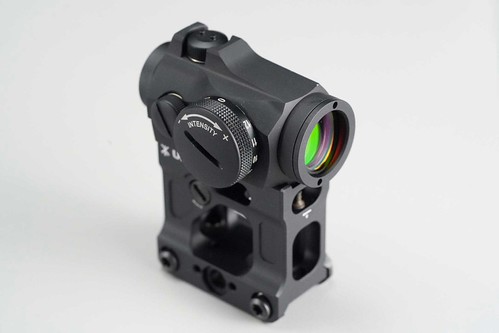
The Aimpoint Micro T-2 remains the benchmark compact rifle red dot. Its combination of durability, battery life, and mounting flexibility makes it exceptionally well suited to the HK33 platform.
Specifications
- 2 MOA dot
- Closed emitter design
- 50,000-hour battery life
- Night vision compatible
- Micro footprint
- Waterproof construction
Pros
- Outstanding battery longevity
- Extremely rugged housing
- Excellent glass clarity
- Minimal perceived parallax
Cons
- Premium price
- Mount sold separately in many packages
My Hands-On Notes
The T-2's window is compact but exceptionally clear. Lens tint is present yet significantly lighter than many competing optics. During rapid transitions, parallax shift remains negligible. Mounted on a low-profile HK claw rail with a suitable riser, I achieved a comfortable lower-third style sight picture relative to the HK33's iron sights.
The adjustment caps are easy to manipulate with gloves, and the brightness dial provides positive tactile feedback. The sealed battery compartment has proven extremely reliable during prolonged field use.
What People Say Online
Military users, law enforcement shooters, and experienced civilian owners consistently praise the T-2 for durability and battery performance. Forum discussions frequently highlight its ability to survive hard use without losing zero.
Mounting Clarity
The Micro footprint gives access to dozens of mounts. For the HK33, I recommend pairing it with a quality Picatinny claw mount and a low-to-medium height Micro mount.
-----➤ Explore User Feedback and Current Pricing on Amazon
Aimpoint Duty RDS
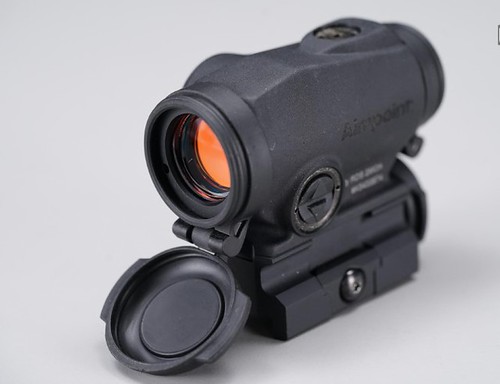
The Duty RDS delivers much of the Aimpoint reputation at a more approachable price point while maintaining serious professional-grade durability.
Specifications
- 2 MOA dot
- Closed emitter
- 30,000+ hour battery life
- Waterproof housing
- NV-compatible settings
Pros
- Excellent value for an Aimpoint
- Durable aluminum construction
- Long battery life
- Crisp dot quality
Cons
- Slightly heavier than T-2
- Less refined optical package
My Hands-On Notes
The optic handles recoil impulses effortlessly. While the HK33 is not especially punishing, repeated firing cycles never induced flicker or zero shift. The controls remain easy to operate while wearing gloves, and brightness transitions are predictable.
Lens coatings create a mild blue tint, though it never interfered with target acquisition. Window distortion is minimal around the edges. Co-witnessing depends entirely on the mount selected, but the elevated HK mounting geometry generally favors lower-third alignment.
What People Say Online
Users often describe the Duty RDS as the practical alternative to the T-2. Reliability reports remain overwhelmingly positive across enthusiast communities.
Mounting Clarity
The optic uses the Micro mounting standard, making it highly compatible with modern HK rail setups.
-----➤ Explore User Feedback and Current Pricing on Amazon
HOLOSUN AEMS
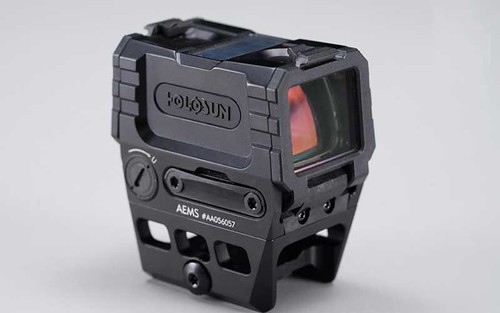
The HOLOSUN AEMS offers one of the largest viewing windows available in a compact enclosed optic.
Specifications
- Multi-reticle system
- Solar backup
- Closed emitter
- Shake Awake technology
- Long battery life
Pros
- Huge field of view
- Excellent value
- Multiple reticle options
- Lightweight design
Cons
- More complex controls
- Slightly larger footprint
My Hands-On Notes
The large window noticeably improves situational awareness. Tracking targets during movement feels easier than with traditional tube-style optics. The emitter remains protected from rain, dust, and debris.
Button tactility is excellent even with gloves. Lens tint is slightly more noticeable than premium Aimpoint optics, but not distracting. I observed minimal parallax error at realistic engagement distances. The optic also handled recoil without any detectable point-of-impact shift.
What People Say Online
Owners frequently mention the combination of value, durability, and viewing area. Many consider it one of the strongest enclosed-emitter rifle optics currently available.
Mounting Clarity
The supplied mounting system works well on Picatinny-equipped HK claw rails and provides adequate height options.
-----➤ Explore User Feedback and Current Pricing on Amazon
Trijicon MRO
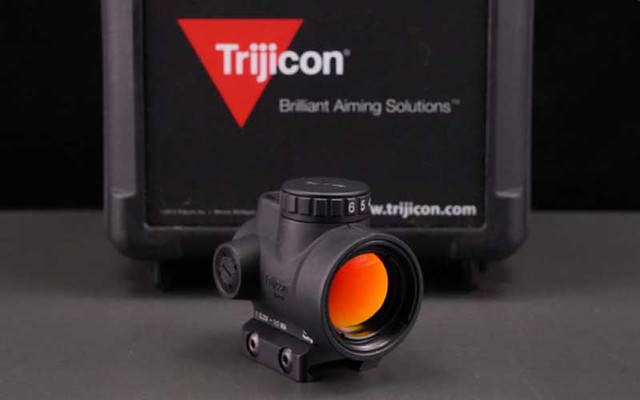
The Trijicon MRO remains a popular choice for shooters wanting a large objective lens and robust construction.
Specifications
- 2 MOA dot
- Sealed tube design
- Long battery life
- Waterproof construction
- Ambidextrous controls
Pros
- Large viewing area
- Lightweight
- Strong durability record
- Simple controls
Cons
- Slight magnification effect
- Some users notice edge distortion
My Hands-On Notes
The larger objective creates a very open sight picture. Dot brightness remains strong in direct sunlight. The rotary brightness knob provides positive engagement and is easy to adjust with gloves.
The MRO exhibits a slight optical magnification effect compared with true 1x competitors. However, once acclimated, target acquisition remains extremely fast. Recoil resistance and zero retention are excellent.
What People Say Online
User feedback generally highlights ruggedness, battery longevity, and quick handling characteristics. Many HK owners specifically appreciate its traditional tube profile.
Mounting Clarity
The MRO requires a dedicated MRO-pattern mount. Numerous Picatinny-compatible options exist for HK claw rail systems.
-----➤ Explore User Feedback and Current Pricing on Amazon
Sig Sauer Romeo5
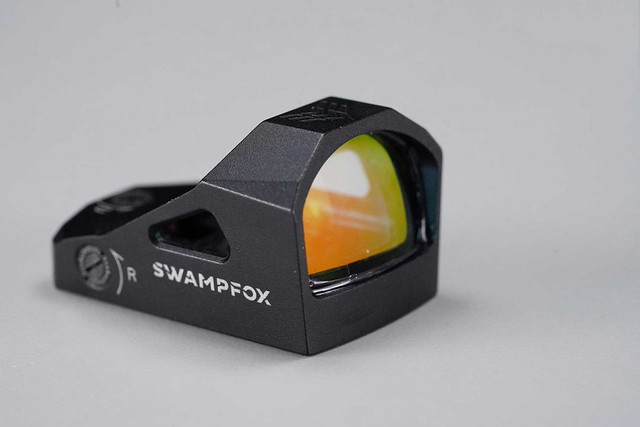
The Romeo5 continues to dominate the budget category because it delivers dependable performance at a very accessible price.
Specifications
- 2 MOA dot
- Motion activation
- Closed emitter
- Waterproof construction
- 40,000+ hour battery life
Pros
- Excellent value
- Reliable electronics
- Compact size
- Easy operation
Cons
- Less refined glass
- Average turret feel
My Hands-On Notes
The Romeo5 punches well above its price class. The motion-activated illumination system works reliably and extends battery life considerably. Lens tint is more noticeable than premium competitors but remains manageable.
The buttons provide sufficient tactile feedback with gloves. Window distortion is controlled well for the price range. During testing, the optic maintained zero and handled recoil without issue.
What People Say Online
Online reviews consistently recommend the Romeo5 as one of the best entry-level rifle optics available. Long-term reliability reports remain surprisingly strong.
Mounting Clarity
Its Micro-compatible mounting footprint gives HK33 owners numerous mounting options through modern Picatinny adapters.
-----➤ Explore User Feedback and Current Pricing on Amazon
Primary Arms SLX MD-25
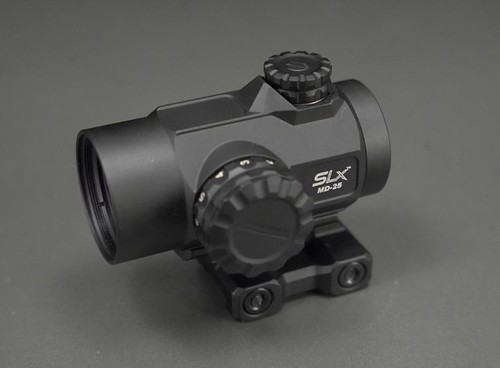
The SLX MD-25 combines a larger 25mm objective with a durable housing and highly competitive pricing.
Specifications
- 2 MOA dot
- 25mm objective lens
- Long battery life
- Waterproof construction
- Rotary brightness control
Pros
- Large viewing window
- Strong value proposition
- Durable body
- Crisp brightness adjustments
Cons
- Slightly bulkier
- Heavier than Micro optics
My Hands-On Notes
The larger objective lens gives a noticeably more forgiving sight picture. Acquiring the dot from unconventional shooting positions is easier than with smaller tube optics.
The brightness dial is glove-friendly and offers strong tactile clicks. Lens coatings introduce only mild tint. I experienced little observable parallax shift inside typical HK33 engagement distances. Battery compartment sealing appears robust and inspires confidence.
What People Say Online
Many shooters view the MD-25 as one of the best values in the mid-priced rifle optic market. Reliability feedback has been consistently favorable.
Mounting Clarity
The optic ships with Picatinny-compatible mounting solutions that integrate easily with modern HK claw rails.
-----➤ Explore User Feedback and Current Pricing on Amazon
How I Tested / Evaluation Criteria
Parallax Performance
No red dot is completely parallax-free, but the best designs minimize point-of-impact shift as the eye moves behind the optic. I evaluated each sight at multiple distances while intentionally shifting eye position throughout the viewing window.
Co-Witness and Deck Height
The HK33 presents unique challenges because optics sit higher than on most AR platforms. I examined how each optic interacted with common HK claw mounts and Picatinny adapters, paying close attention to sight picture comfort and cheek weld consistency.
Durability
Durability testing focused on housing integrity, lens protection, waterproofing, battery compartment sealing, and long-term zero retention. Roller-delayed rifles generate a distinctive recoil impulse that can expose weaknesses in electronics and mounting systems.
Battery Performance
Battery longevity matters because many shooters leave their optics constantly active. I considered both manufacturer claims and real-world owner experiences regarding runtime and reliability.
Brightness Range
A quality optic must remain visible in bright sunlight while also offering usable low-light settings. NV compatibility was considered where applicable.
Glass Quality
Glass quality affects speed, clarity, and target recognition. I evaluated lens tint, edge distortion, reflection management, and overall transparency.
Controls and Ergonomics
Brightness controls, turret caps, battery access, and button placement all influence usability. Special attention was paid to operation while wearing gloves.
Mounting Ecosystem
The strongest optics benefit from broad mount compatibility. Footprint availability and support from aftermarket manufacturers significantly influenced final rankings.
Best Red Dot For Hk33 Mounting and Compatibility Considerations
The HK33 differs substantially from modern flat-top rifles. The receiver lacks an integrated Picatinny rail, so optic selection must begin with mounting strategy.
Most owners choose one of three approaches. Traditional steel claw mounts preserve the classic HK appearance and lock directly onto the receiver. Modern Picatinny claw mounts provide the greatest flexibility and allow compatibility with virtually any contemporary optic. STANAG-compatible systems remain available but are less common today.
For most shooters, Micro-footprint optics offer the greatest flexibility. The footprint is supported by Aimpoint, SIG, Holosun, Primary Arms, and numerous mount manufacturers. This allows precise adjustment of optic height to achieve a comfortable shooting position.
Weight distribution also matters. One advantage of the HK33 is its lively handling. Heavy optics can make the rifle feel front-heavy and reduce responsiveness during rapid transitions. Compact enclosed emitters often provide the best balance between durability and handling.
Closed-emitter optics generally make the most sense on a rifle like the HK33. They better resist environmental contamination from dust, rain, mud, and debris. Open-emitter designs work well on pistols but offer fewer advantages on a fighting rifle.
Battery management is another important factor. Modern optics offering 30,000 to 50,000 hours of runtime allow users to leave the sight constantly active. This eliminates the need to activate the optic during emergencies.
Window size should match intended use. Smaller optics such as the Aimpoint T-2 prioritize compactness and durability. Larger-window options like the AEMS improve situational awareness and can accelerate target acquisition during dynamic shooting.
Finally, always invest in a quality mount. Even the best optic will underperform if attached to a poorly manufactured claw rail. A rigid mounting interface is essential for maintaining zero and maximizing accuracy potential.
FAQs
Can I mount any red dot directly on an HK33?
No. The HK33 requires a claw mount, STANAG mount, or Picatinny adapter before a red dot can be installed.
Is a closed-emitter optic better for the HK33?
Yes. Closed-emitter designs provide better protection from environmental contamination and generally offer superior durability.
What footprint is most versatile for HK33 owners?
The Aimpoint Micro footprint is currently the most versatile due to extensive aftermarket support.
Do I need co-witness with HK33 iron sights?
Not necessarily. Many shooters prioritize a comfortable cheek weld over strict co-witness alignment because of the HK mounting geometry.
Is the Aimpoint Micro T-2 worth the price?
For shooters prioritizing maximum durability, battery life, and proven reliability, the T-2 remains one of the strongest investments available.
Conclusion
When evaluating the Best Red Dot For Hk33, the Aimpoint Micro T-2 stands at the top thanks to its unmatched durability, battery life, and mounting flexibility. The Duty RDS follows closely for shooters seeking premium performance at a lower cost, while the HOLOSUN AEMS offers an exceptional combination of field of view and value. Budget-conscious owners will find the Romeo5 and SLX MD-25 particularly attractive, and the Trijicon MRO remains a proven performer with a loyal following. Pair any of these optics with a quality HK claw mount, and the HK33 becomes an exceptionally fast and capable rifle platform.